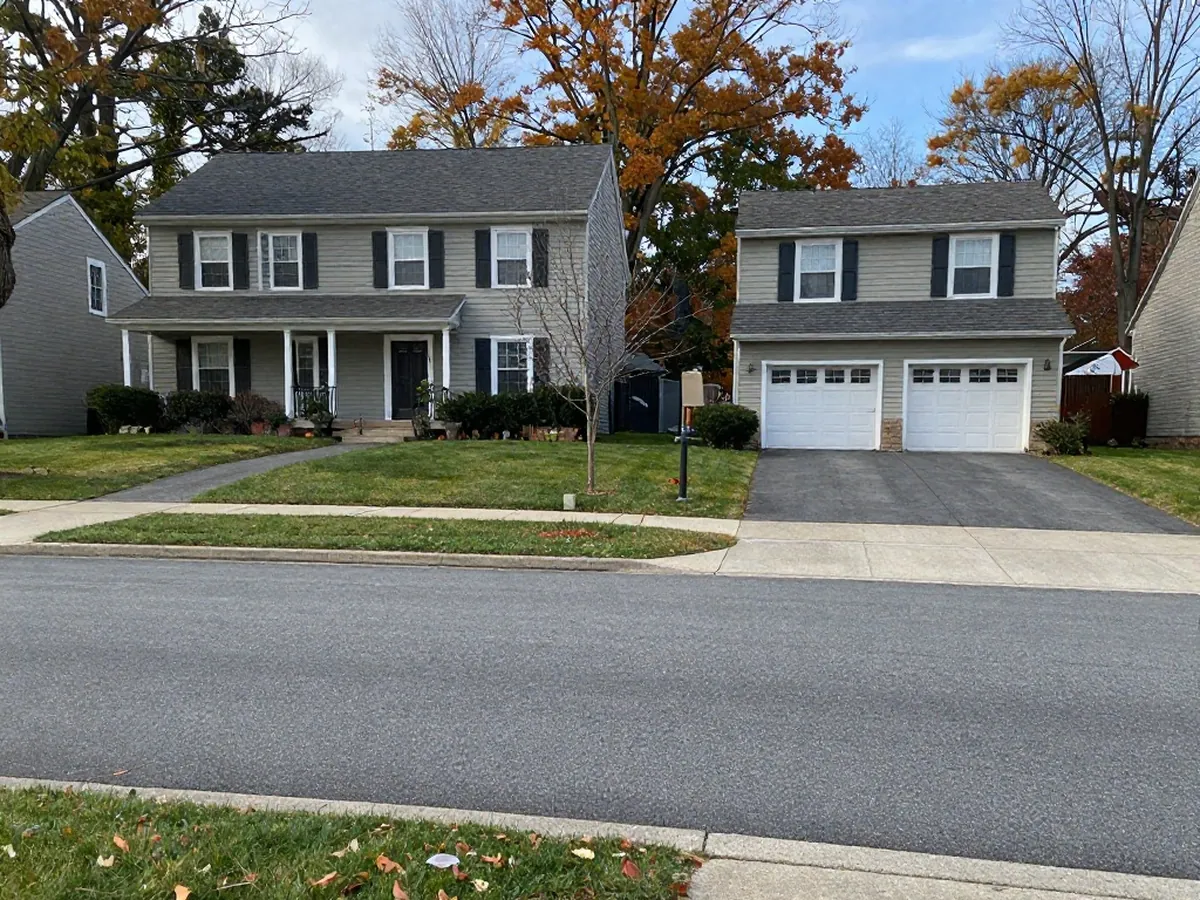
Ridges of ice at the eaves and stains beneath them
Ice Dam Damage in Montville, NJ
Ice dam damage in Montville, NJ shows up as ice along the roof edge, icicles that keep thickening, or a stain inside an outside wall after a thaw. Say where the ice sits and where the water appeared: call (862) 430-2399.
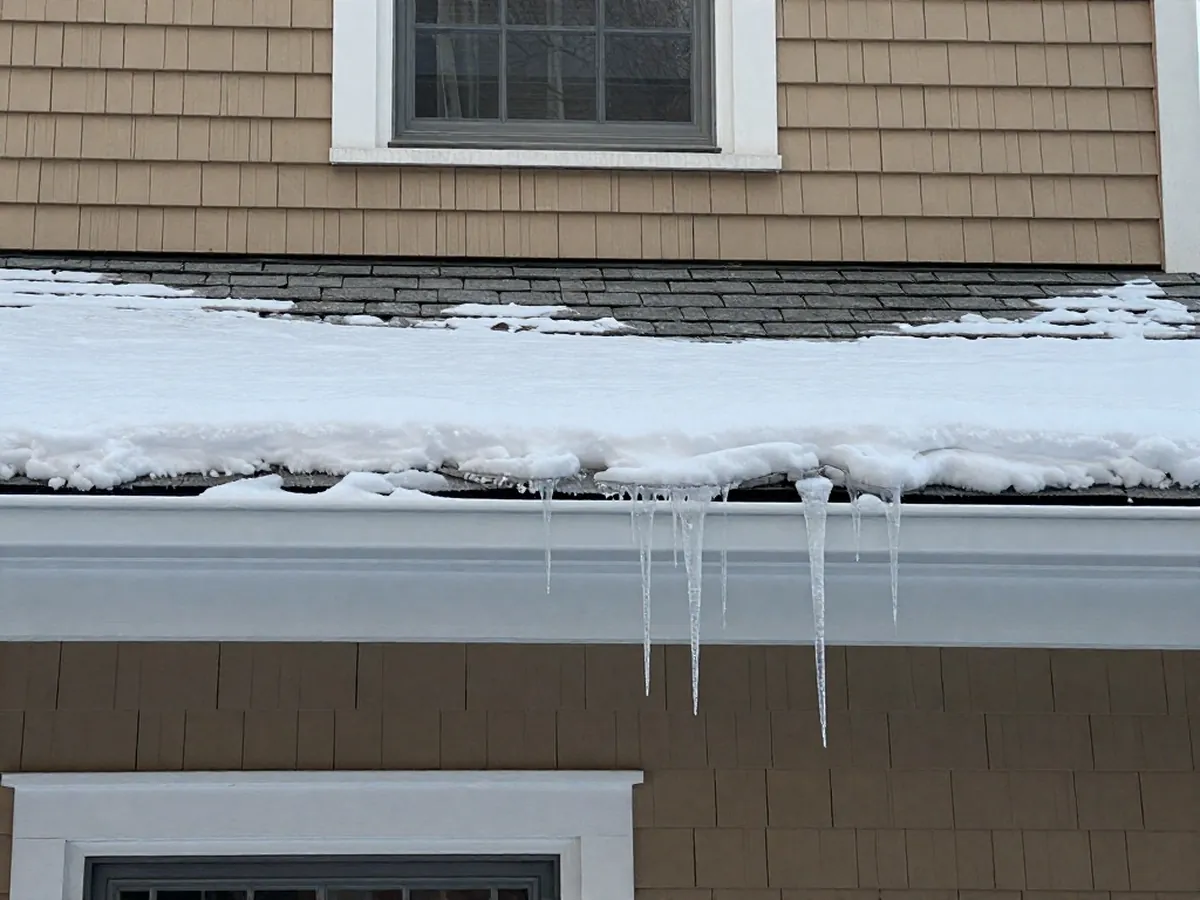
What you might be seeing
- A thick band of ice building up along the lowest edge of the roof
- Long icicles hanging over a door or walkway
- A water stain on a ceiling near an outside wall after a thaw
- A gutter packed with ice and pulling away from the house
- Damp insulation or peeling paint at the top of an outside wall
Looks from the yard and the attic hatch
Every look below is from the yard, an upstairs window or the attic hatch. None of it needs a ladder.
- Photograph the ice from the ground, with the date, before it melts or gets chipped.
- From the attic hatch, look at the boards and insulation along the eaves for damp or staining. Building-science guidance says heat leaking from the house into the attic is what melts the snow.
- Note where along the roof edge the ice forms and which rooms sit beneath it. Both help a roofer trace where heat is escaping.
- Leave the ice alone. Chipping at it with tools, the University of Massachusetts article cautions, can injure people and damage the roof.
The visit
What the roofer can look at
- Call (862) 430-2399, say where the ice sits and where the water showed up inside, and the contractor can arrange a visit.
- The roofer can look along the eaves and into the valleys for lifted or wet shingles where the ice sat.
- The attic comes next: insulation, air leaks around hatches and lights, and ventilation, since heat from the house is what feeds an ice dam.
- Gutters are checked for ice damage, because ice-filled gutters can bend and pull away from the fascia.
- Repair options follow: damaged shingles or flashing, and a self-adhering membrane at the eaves and valleys, which building-science sources describe as protection against leaks.
- The paperwork question closes the visit: New Jersey's ice barrier rule names Sussex County, and the rules page shows what that means here.
Back off and get help if
- A wire sags under ice-laden branches or has fallen: keep 30 feet or more away, then call 911 or JCP&L at 888-544-4877.
- Ice or snow hangs over a door or walkway: keep people and pets away from beneath it.
- A ceiling is bulging with water behind it, or water is reaching a fixture: leave the room and call 911.
- Someone plans to climb up and chop the ice with a hammer or axe: stay on the ground, and call 911 if anyone falls.
Questions for the roofer
What to ask on the eaves and the attic
Is a membrane at the eaves and valleys part of the plan? Where are the air leaks into the attic, and who handles sealing and insulation? Are the gutters damaged?
The Building America guide treats air sealing as the top priority, so a plan that talks only about the shingles answers half the question.
What moves the size of the job
What widens an ice dam repair
How far the water traveled inside. How many shingles and how much flashing the ice lifted. Whether the gutters came away with the ice.
The attic can add a second scope. The Department of Energy's guide says ice dams can also form in valleys and around chimneys, so a complicated roofline has more places to check.
FAQ
Questions people ask
How urgent is an ice dam on your number out of ten?
At 8 to 10, a ceiling bulges, water reaches a fixture, a wire sags or ice hangs over a door: get clear and call 911 or JCP&L. At 4 to 7, a stain is spreading, so call (862) 430-2399 before the next thaw. At 1 to 3, ice clings to the edge while the ceiling stays dry: photograph it and watch.
Does Morris County need an ice barrier under new shingles?
In State Bulletin 07-3 the requirement applies where January's average daily temperature is 25 degrees or less, and Sussex County is the New Jersey area it names. Morris County is not named. The town construction office can confirm for your address, and a roofer may still propose a membrane.
Does heat tape stop ice dams?
A University of Massachusetts article advises against electric heat cable. It says the cable wastes energy, can embrittle shingles and poses a fire risk, and that it tends to create a second dam just above itself.
What causes an ice dam in the first place?
The Building America Solution Center says warmth from the attic melts snow on the roof. The water runs to the cold overhang and refreezes there, and the ice then dams the next melt. It calls sealing air leaks into the attic the most important step.
Are ice dam repairs offered in Towaco, Pine Brook, Boonton and Lake Hiawatha?
Yes, plus Montville. Local notes sit on Towaco roofing, Pine Brook roofing, Boonton roofing and Lake Hiawatha roofing. Call (862) 430-2399 and name the town. Renters pass the stain to the landlord first.
Before you call
What to photograph before the thaw
The line of ice from the ground, with the date. The ceiling stain, and its edge traced in pencil. The attic boards along the eaves, if the hatch is reachable.
Call (862) 430-2399 with those pictures nearby and say which side of the house the ice is on.
Habits that cost more
Winter moves that make ice dams worse
Electric heat cable along the eaves.
Chopping the ice with a hammer, pick or axe, which the Massachusetts article says can hurt people and damage the roof.
Raking snow without care: the same article says a roof rake can help, but it may scrape the shingles.
Treating the gutters as the cause.
The article says they concentrate ice but do not create the dam.
The job in pictures
Where the ice forms and why
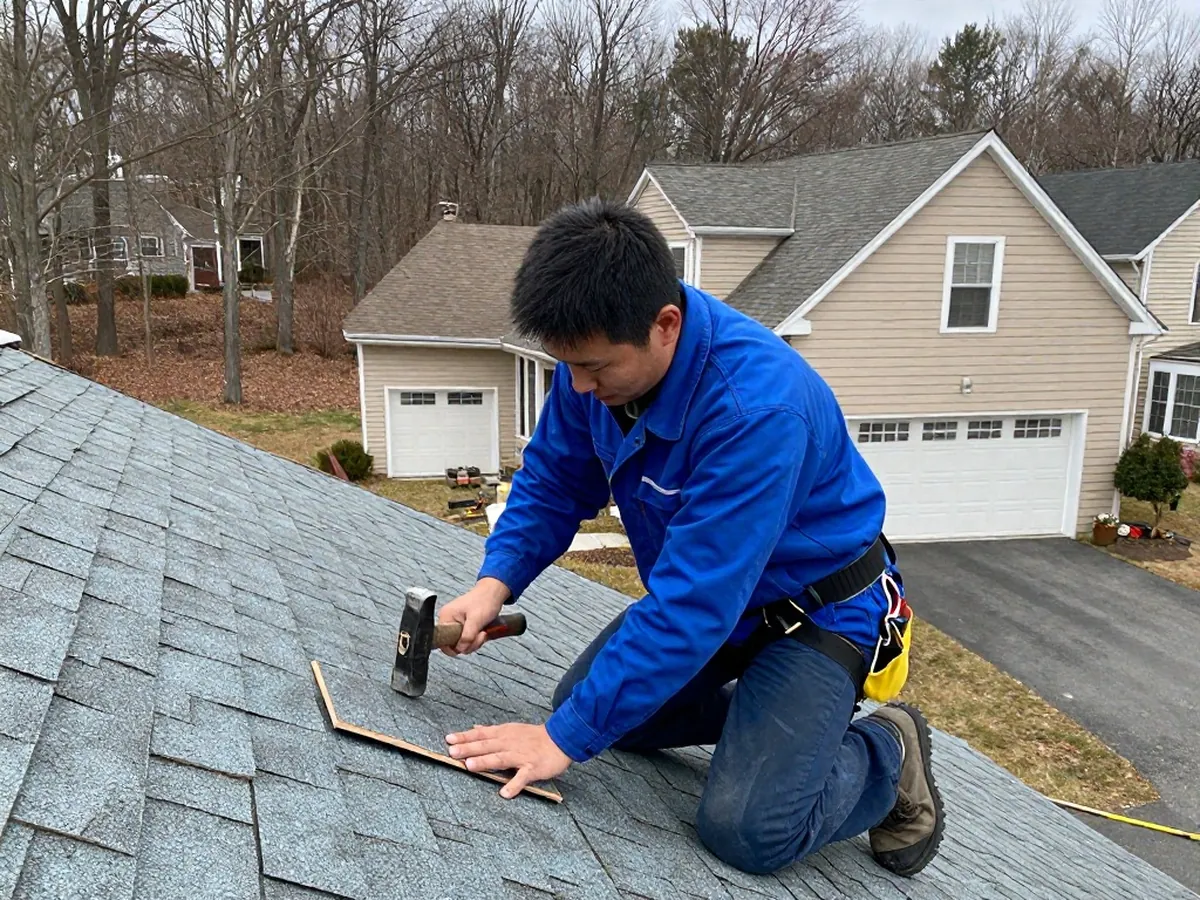
In the picture, ice has built up along the lowest row of shingles on a snowy roof, with icicles hanging below it. Heat from the house warms the roof higher up and melts the snow. The water runs down to the cold overhang and freezes again.
Newark's January average is 32.8 degrees with a normal low of 25.5, so days that cross the freezing line are common. Rutgers puts annual snowfall in northern New Jersey at 40 to 50 inches.
Paperwork, briefly
The ice barrier rule, county by county
New Jersey's code calls for an ice dam membrane in underlayment and flashing where January's average daily temperature is 25 degrees or less. The state's bulletin names Sussex County for that threshold.
What Morris County towns ask is on the rules page, along with the ordinary maintenance rule for re-covering a detached house.
Before you call
Keep the street address, what you noticed and the roof's age close by, then call (862) 430-2399. If you rent, your landlord decides on roof work, so that conversation comes first. Served: Montville, Towaco, Pine Brook, Boonton and Lake Hiawatha.