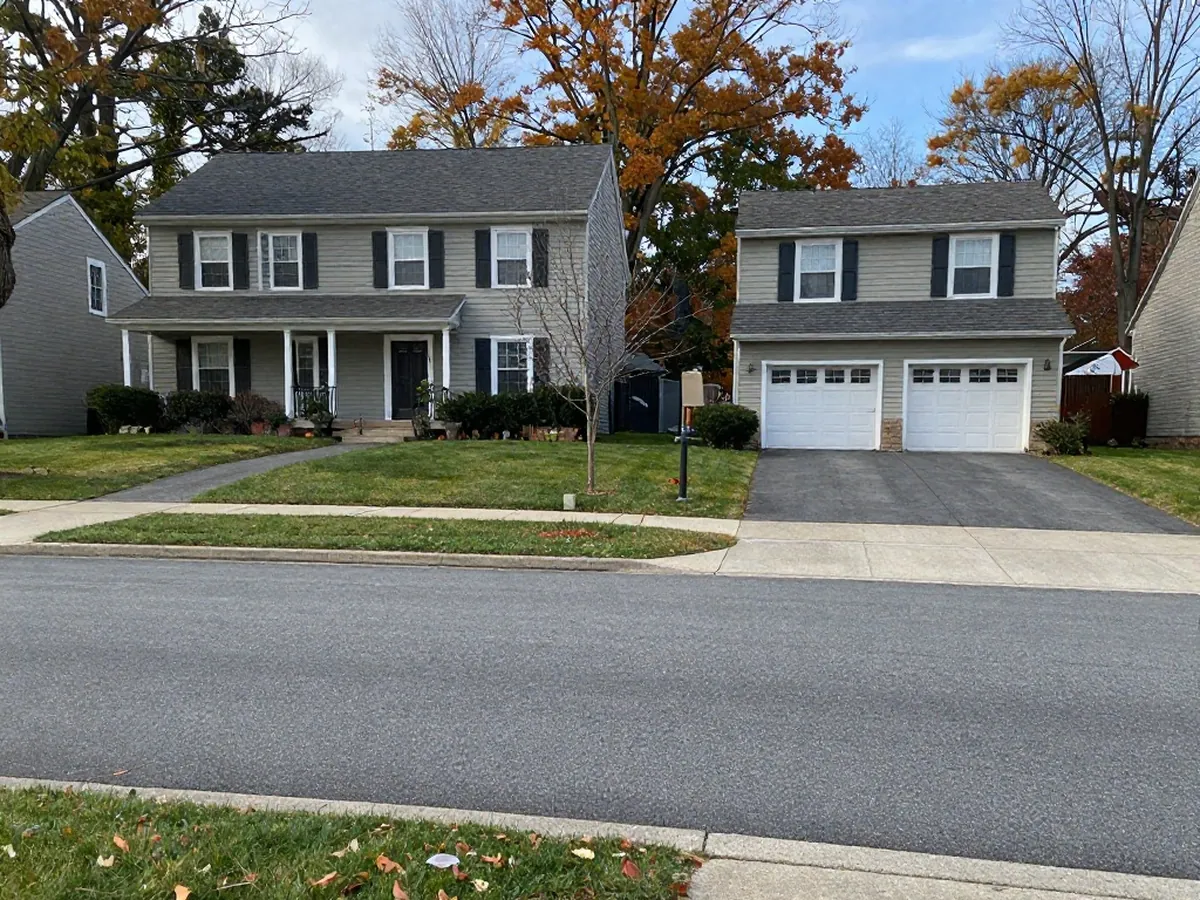
Stains, lifted shingles and daylight in the attic
Roof Repair in Montville, NJ
Roof repair in Montville, NJ usually begins small: a brown patch on a ceiling, a shingle in the lawn, a thin line of daylight at the attic boards. Describe what you found and where: call (862) 430-2399.
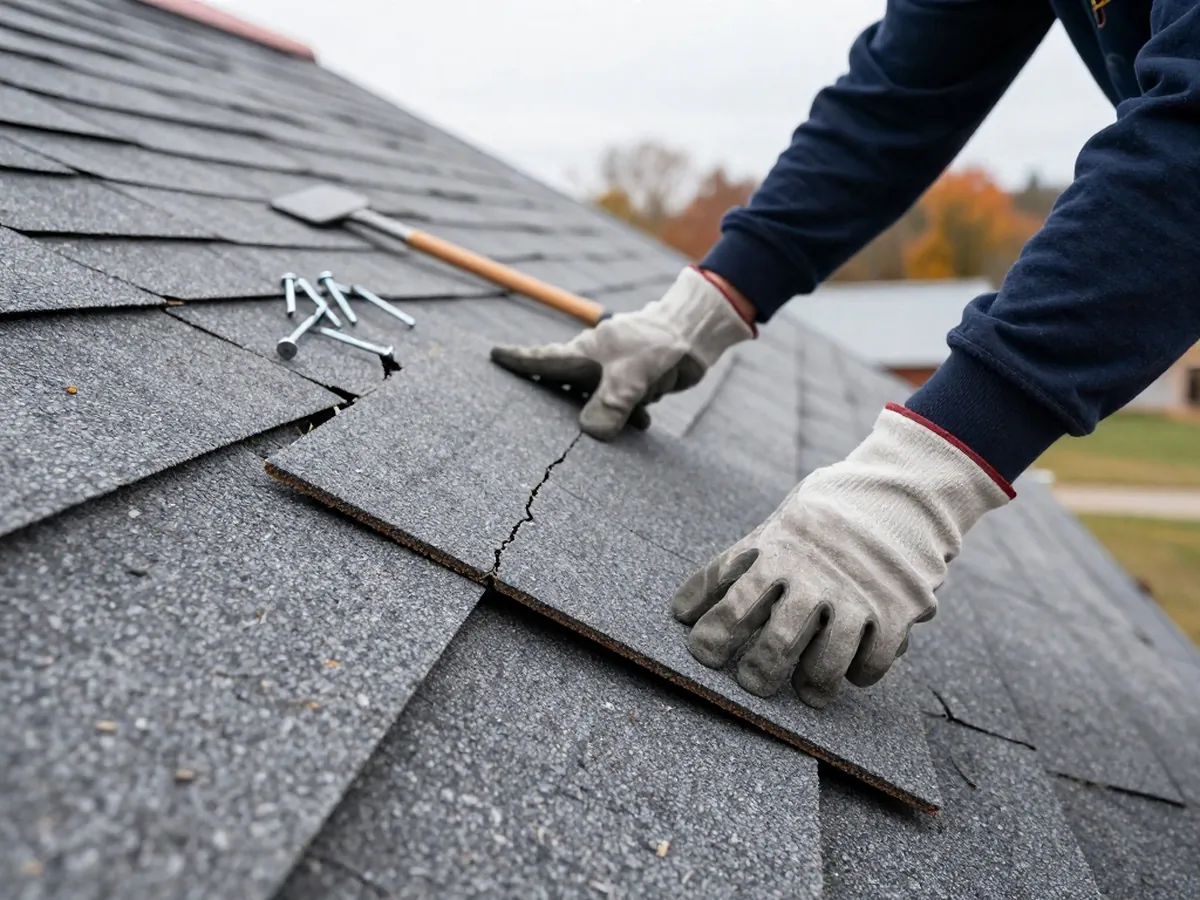
What you might be seeing
- A brown patch on a ceiling that darkens a day or two after rain
- Pieces of shingle in the yard after a windy night
- A row of shingles that curls up at the corners
- Insulation in the attic that feels damp or smells musty
- A line of daylight where two roof boards meet
Looks from the yard and the attic hatch
Every look below is from the yard, an upstairs window or the attic hatch. None of it needs a ladder.
- In daylight, walk around the house with binoculars and follow the ridge, then each edge, for shingles that curl, crack or have gone missing. A notebook helps.
- Open the attic hatch with a flashlight and read the boards under the roof. Dark streaks, wet insulation or a shaft of light each show a roofer where to begin.
- Mark the edge of the stain with a light pencil line and note the date beside it. After the next rain, a stain that has crept past the line tells you the leak is still active.
- Photograph the damage, and the room below it, before anyone cleans up. New Jersey's insurance department asks policyholders to take pictures before throwing damaged things away.
The visit
What the roofer can look at
- Call (862) 430-2399, describe what you found and where, and the contractor can arrange a visit.
- The roofer can start outside, along the ridge and the edges, and over the spot above the stain.
- Next comes the attic side, where stains, wet insulation and daylight show up under the boards.
- Flashing, vent pipes and the gutter line get a close look, because trade guidance calls flashing the most vulnerable part of a roof.
- The roofer can explain the repair options and compare them with a new roof when the damage is spread out.
- Last is the paperwork question: whether the repair needs any, answered town by town on the rules page.
Back off and get help if
- Water seeps around a ceiling light or an outlet: step out of the room without touching the switch, then call 911 once you are standing somewhere dry.
- A ceiling is bulging or sagging: the drywall may be holding a pool of water, so clear the room below it and call 911.
- A power line is down or sagging toward the house: keep 30 feet or more between you and it, then call 911 or JCP&L at 888-544-4877.
- The damage sits on a roof that is wet, frosted or steep: stay down on the lawn, and call 911 if anyone falls from a roof or ladder.
Questions for the roofer
Three questions that shorten a repair visit
Which shingles will be replaced, and how many? Does the flashing near the stain get looked at too? And what protects the spot if rain arrives before the work is finished?
For jobs above $500, New Jersey calls for the answers in a written contract, which the rules page describes.
What moves the size of the job
What makes one repair bigger than another
The number of shingles involved is only part of it. A steep or tall roof changes how the crew sets up. Wet boards under the shingles add work, and so does flashing that needs to come off and go back.
Access counts as well: overhead wires, a tight driveway or a hedge along the wall. A roofer sizes the job after seeing the roof, not from the street.
FAQ
Questions people ask
How urgent is a leaking roof on your number out of ten?
Rate it yourself. At 8 to 10, water drips near wiring, a ceiling bulges or a line is down: get everyone clear and call 911 (JCP&L for a line) before anything else. At 4 to 7, the stain spreads after each rain, so call (862) 430-2399 in the next few days. At 1 to 3, a single curled shingle, or a ceiling mark that has not changed in weeks: observe from the ground and call if it returns.
Can a few bad shingles be replaced without a new roof?
Often, yes. If only a handful of shingles failed, a patch is a normal answer. The Department of Energy brief on repairing roofs passes along a builders' guide threshold. Once the damaged area passes 10 percent of the roof, the guide leans toward replacing it. A roofer looks at the shingles around the damage to see whether it is a patch or a pattern.
What do I photograph before a repair?
The stain, the room below it and anything that fell. New Jersey's insurance department asks policyholders to take pictures before discarding damaged items and to keep every receipt. The same notice says a policyholder is not required to use the roofer an insurer suggests.
What does the attic show that the ceiling does not?
The underside of the roof boards. The Asphalt Roofing Manufacturers Association, writing after Superstorm Sandy, suggests looking there for leaks and calls flashings the most vulnerable points. Dark streaks, wet insulation or daylight help a roofer find where water gets in.
Does repair work cover Towaco, Pine Brook, Boonton and Lake Hiawatha?
The same contractor works in all of them. Towaco roofing, Pine Brook roofing, Boonton roofing and Lake Hiawatha roofing each have a page of local notes. Name your street when you call (862) 430-2399. If you rent, the owner decides on roof work, so your landlord gets the first call.
Before you call
Details to have on hand for a leak call
The street address. The room where the stain is and whether it grows after every rain. How long it has been there. The roof's age, if anyone knows it.
Photos taken with the date help most. Owners and landlords can call (862) 430-2399 and describe all of it in a minute or two.
Habits that cost more
Mistakes that turn a patch into a bigger job
Pressing on a wet ceiling.
A Pennsylvania flood fact sheet says drywall that stays wet turns fragile and falls apart when bumped.
Climbing up to look.
Wet shingles are slippery, and a roofer can read most of the story from the ground and the attic.
Throwing the evidence away.
The state's insurance department asks for photos first.
Paying everything before the work begins.
The asphalt shingle makers' trade group advises caution with anyone who asks for payment up front.
The job in pictures
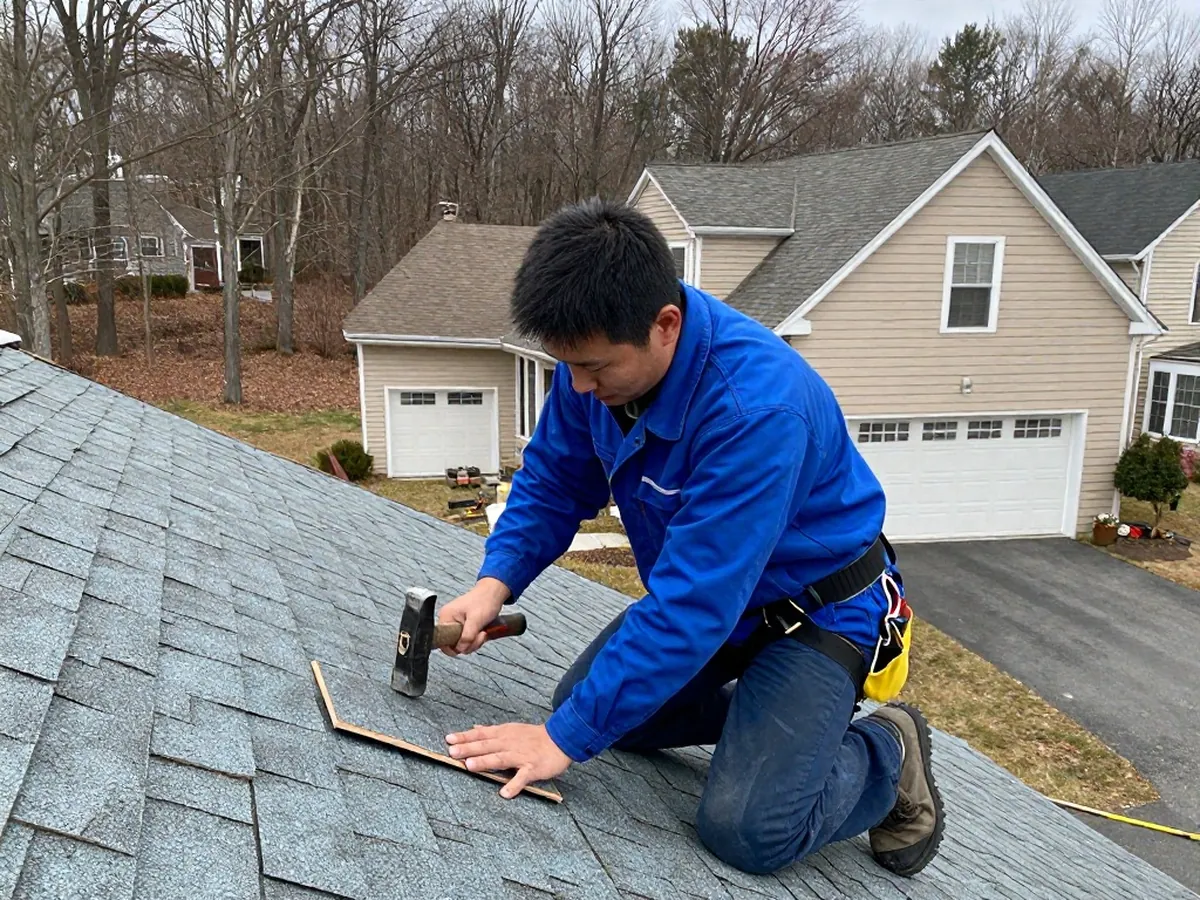
How one shingle comes out and goes back in
A flat bar lifts the nails that hold a damaged shingle, and the shingle slides out. The new one slips under the row above and is nailed through its own band, and the next course covers the nail heads.
Federal guidance for asphalt shingles in high-wind regions calls for roofing nails instead of staples, and for underlayment beneath the shingles. If only one or two shingles failed, that is the whole job.
Paperwork, briefly
Does a repair need paperwork?
State rules classify a swap of the roof covering already on a one- or two-family detached house as ordinary maintenance. No permit application is filed and no inspection is scheduled, though the code's standards for the work still apply.
Rowhouses, condos and larger buildings sit outside that sentence of the state's alert, and every town runs its own office. The rules page lists the Montville, Boonton and Parsippany-Troy Hills offices.
Before you call
Keep the street address, what you noticed and the roof's age close by, then call (862) 430-2399. If you rent, your landlord decides on roof work, so that conversation comes first. Served: Montville, Towaco, Pine Brook, Boonton and Lake Hiawatha.